
Learning together about circular construction
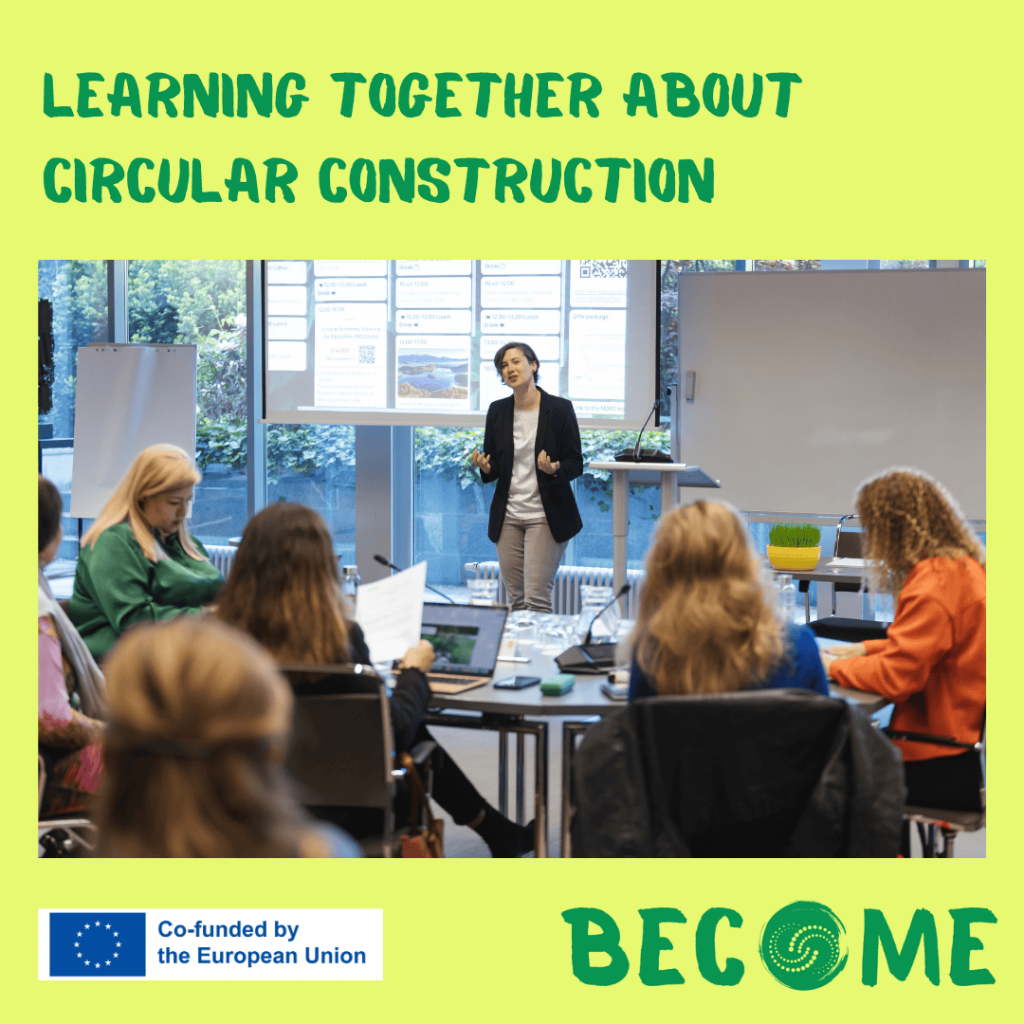
In 2025, Bas Nulkes, construction technology teacher and dedicated strategic project leader at ROC Midden Nederland, travelled with three colleagues to Bled, Slovenia. There, they took part in an international BECOME training program on circular construction. The training fits within a broader development in construction education aimed at preparing students for the future of the building sector. Sustainability already plays an important role in the curriculum, but a dedicated elective on circular construction is still missing. Bas explains:
“We want to take bigger steps towards circular construction. It’s the future of the industry. We already have a sustainability module, but we need more practical and applied electives.”
The training in Slovenia aligned well with this ambition. The knowledge gained is now being used to develop new modules and lessons.
International collaboration
Participants from four different countries joined the training, bringing a wide range of perspectives on circularity. It was interesting to see how other countries approach the topic. The Netherlands is not always ahead; circularity is also well developed in many other European countries.
Structure of the training
The programme followed a train‑the‑trainer format and lasted four days. Each day focused on a different theme, covering a total of sixteen modules. The approach combined short presentations, practical assignments, and work on real‑life challenges and case studies. The insights and outcomes from these activities are now being used to further refine the teaching modules.
What worked well?
Bas particularly appreciated the practical elements of the training:
- Working in small, international groups
- Concrete examples from construction practice
- Case studies, such as designing a circular washing machine
“Practical examples and working together are the most effective.”
He also took three key insights home:
- There is a great deal of data and knowledge available on circularity
- Circularity is more closely connected to construction than he initially expected
- Every part of the curriculum offers opportunities to address circularity
“It’s about the bigger picture. You can address it per topic, but you need to keep the whole in mind.”
What does this mean for education?
Bas is not yet applying the new knowledge as a separate programme, but he increasingly brings the topic into his lessons. For example:
- Responsible handling of waste
- More efficient building and calculation
- Raising awareness among students
“I notice that students really start thinking about it when you keep bringing it up.”
In the coming period, the team will explore whether the new modules are suitable for long‑term integration into the curriculum.
Looking ahead
The training has increased Bas’s motivation and awareness.
“It needs attention. You can see that many people are working on it. Motivation grows within projects, especially when you realise it can also be economically viable.”
Ideas for the future include:
- More site visits to circular projects
- Guest speakers from the field
- Learning in new and more engaging ways
Training modules coming
In March, a five‑day training for professionals will take place, covering several modules. Afterwards, participants will provide feedback, which will be used to further refine the materials. At the end of the year, the BECOME project will host a final event in Utrecht (NL), after which the training modules will be made available online for everyone.
Have you already signed up for our training in March? A few limited spots are still available.
More information: https://becomeproject.eu/news/circular-economy-training-for-prosessionals/
More information: https://becomeproject.eu/news/circular-economy-training-for-prosessionals/